New Approaches to PPP Outlined at IPM: Risk Redistribution and Independent Expertise of VEB.RF
New Approaches to PPP Outlined at IPM: Risk Redistribution and Independent Expertise of VEB.RF
13 May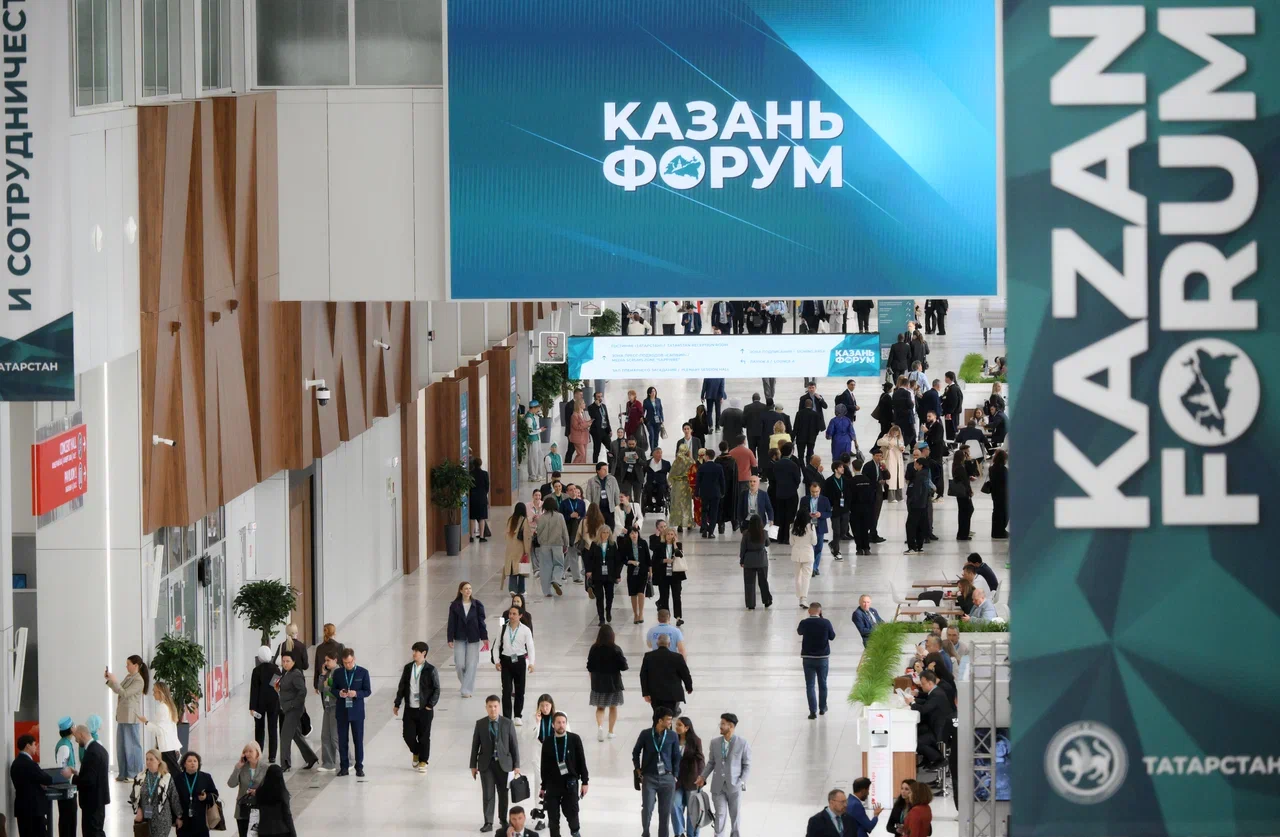
13–15 May 2026 | Kazan Expo International Exhibition Centre
The portfolio of PPP projects in Russia has reached 7.7 trillion roubles, but it is precisely this scale that has forced a tightening of approaches to project selection and financing.
The topic of public-private and municipal-private partnership (PPP and MPP) held a special place in the business programme of the International Property Market (IPM) Exhibition and Conference. Participants of the session "Assessing the Effectiveness of a PPP/MPA Project and Determining Its Comparative Advantage: How Has the Methodology Changed and What Should We Prepare For?" discussed changes to the methodology that came into effect in August 2025, as well as the new role of VEB.RF as an independent expert.
Alexander Kirevnin, Managing Director of VEB.RF, explained why PPP and MPP mechanisms are now in the spotlight. According to him, it is concessions and public-private partnership agreements that have become the most effective tool for building infrastructure. The total portfolio of such projects has already reached 7.7 trillion roubles, and even under difficult conditions with a high key rate, 309 agreements worth almost 570 billion roubles were concluded last year.
However, the scale has also given rise to problems. The speaker highlighted the main challenges of recent years: the pandemic with its labour resource constraints and rising material prices, followed by a sharp increase in the key rate.
When external factors began to take effect, the parties looked inside the already signed agreements and saw that virtually all risks had effectively been shifted onto the public side. Meanwhile, the investor receives income and, therefore, should also bear part of the risks.
Another problem is demand. Large facilities (polyclinics, roads) are not always needed by residents in the volume and quality in which they are planned. The main trigger was the bypass road project in the Samara–Tolyatti area, after which presidential instructions appeared to scrutinise large projects particularly thoroughly.
Since August 2025, a unified assessment methodology has now been in effect for agreements under Federal Law No. 224-FZ, and VEB.RF has been given a specific role: to conduct an independent assessment of projects.
For federal projects, the opinion of VEB.RF is advisory in nature; for projects in donor regions (regions that do not receive subsidies) – likewise, but with a reasoned response.
"The expertise remains free of charge for initiators and fits within 90 days. This is not unnecessary bureaucracy, but additional confidence that the project is genuinely needed by people," noted Alexander Kirevnin.
The speaker separately addressed concessions. Currently, there is no unified assessment methodology there; each region and municipality calculates in its own way, so the same project may be assessed differently. The new procedure should make the system uniform: the methodology is currently being discussed and will be close to the one already in place for PPP.
The draft law is at the final stage in the Government Apparatus, with the launch scheduled for September this year. The speaker stressed that this will not create additional labour costs: an assessment was carried out previously anyway, and now there will be a unified format that only needs to be mastered once.
The next presidential instruction concerns a new financing model, in particular concession bonds. The idea is that after construction is completed and the project moves into operation (when construction risks have already been removed), at least 80% of the debt can be replaced with fixed-rate bonds. This protects both the investor and the public side from rising interest payments.
As a reminder, the International Property Market Exhibition and Conference is taking place on 13–15 May at the Kazan Expo International Exhibition Centre within the framework of the International Economic Forum "Russia – Islamic World: KazanForum". This year's main theme is the use of artificial intelligence in construction.
The portfolio of PPP projects in Russia has reached 7.7 trillion roubles, but it is precisely this scale that has forced a tightening of approaches to project selection and financing.
The topic of public-private and municipal-private partnership (PPP and MPP) held a special place in the business programme of the International Property Market (IPM) Exhibition and Conference. Participants of the session "Assessing the Effectiveness of a PPP/MPA Project and Determining Its Comparative Advantage: How Has the Methodology Changed and What Should We Prepare For?" discussed changes to the methodology that came into effect in August 2025, as well as the new role of VEB.RF as an independent expert.
Alexander Kirevnin, Managing Director of VEB.RF, explained why PPP and MPP mechanisms are now in the spotlight. According to him, it is concessions and public-private partnership agreements that have become the most effective tool for building infrastructure. The total portfolio of such projects has already reached 7.7 trillion roubles, and even under difficult conditions with a high key rate, 309 agreements worth almost 570 billion roubles were concluded last year.
However, the scale has also given rise to problems. The speaker highlighted the main challenges of recent years: the pandemic with its labour resource constraints and rising material prices, followed by a sharp increase in the key rate.
When external factors began to take effect, the parties looked inside the already signed agreements and saw that virtually all risks had effectively been shifted onto the public side. Meanwhile, the investor receives income and, therefore, should also bear part of the risks.
Another problem is demand. Large facilities (polyclinics, roads) are not always needed by residents in the volume and quality in which they are planned. The main trigger was the bypass road project in the Samara–Tolyatti area, after which presidential instructions appeared to scrutinise large projects particularly thoroughly.
Since August 2025, a unified assessment methodology has now been in effect for agreements under Federal Law No. 224-FZ, and VEB.RF has been given a specific role: to conduct an independent assessment of projects.
For federal projects, the opinion of VEB.RF is advisory in nature; for projects in donor regions (regions that do not receive subsidies) – likewise, but with a reasoned response.
"The expertise remains free of charge for initiators and fits within 90 days. This is not unnecessary bureaucracy, but additional confidence that the project is genuinely needed by people," noted Alexander Kirevnin.
The speaker separately addressed concessions. Currently, there is no unified assessment methodology there; each region and municipality calculates in its own way, so the same project may be assessed differently. The new procedure should make the system uniform: the methodology is currently being discussed and will be close to the one already in place for PPP.
The draft law is at the final stage in the Government Apparatus, with the launch scheduled for September this year. The speaker stressed that this will not create additional labour costs: an assessment was carried out previously anyway, and now there will be a unified format that only needs to be mastered once.
The next presidential instruction concerns a new financing model, in particular concession bonds. The idea is that after construction is completed and the project moves into operation (when construction risks have already been removed), at least 80% of the debt can be replaced with fixed-rate bonds. This protects both the investor and the public side from rising interest payments.
As a reminder, the International Property Market Exhibition and Conference is taking place on 13–15 May at the Kazan Expo International Exhibition Centre within the framework of the International Economic Forum "Russia – Islamic World: KazanForum". This year's main theme is the use of artificial intelligence in construction.