Freight Traffic Along the North–South International Transport Corridor Could Reach 30 Million Tonnes by 2032–2033
Freight Traffic Along the North–South International Transport Corridor Could Reach 30 Million Tonnes by 2032–2033
22 May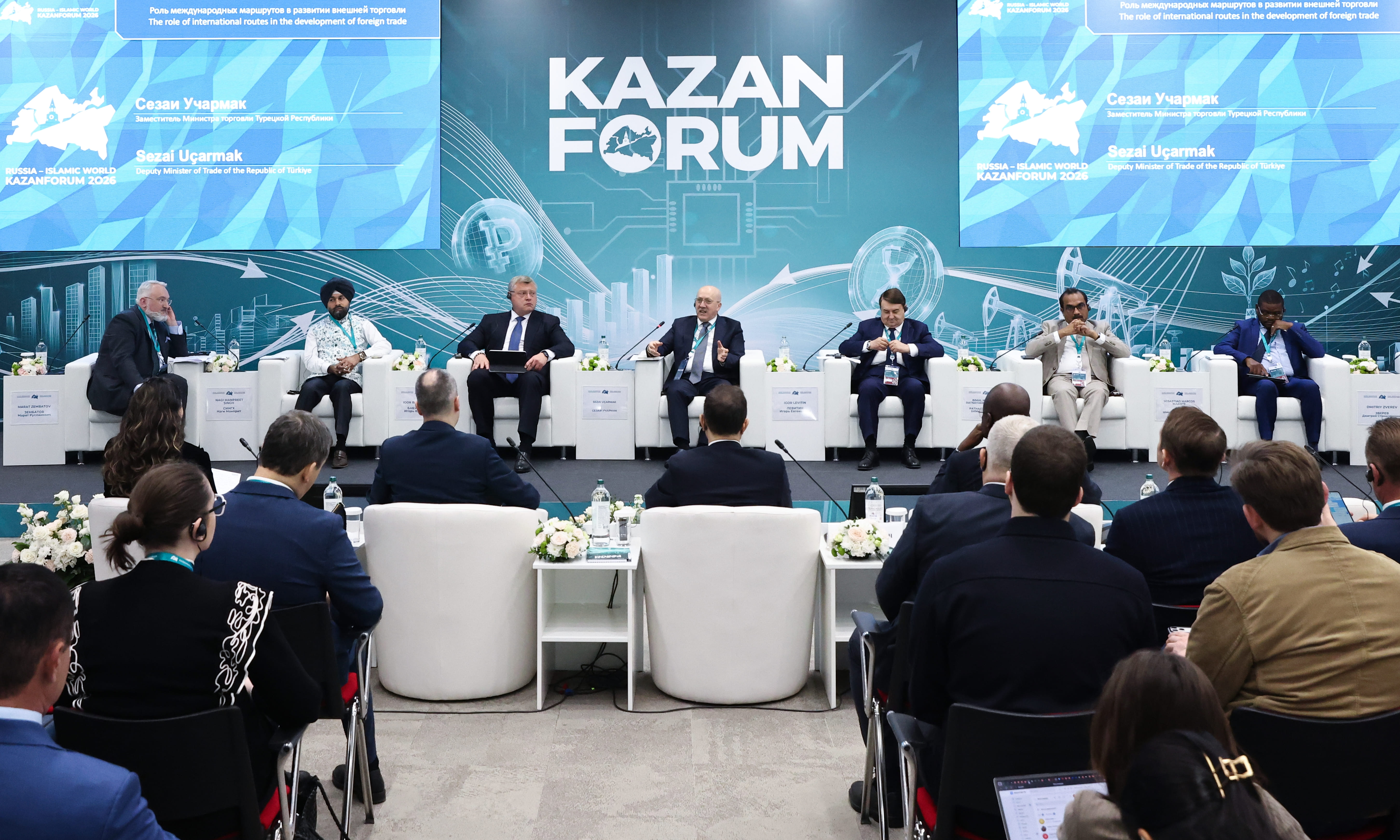
Activity along the International North–South Transport Corridor (INSTC) is on the rise, driven primarily by Iran's growing role. According to expert forecasts, freight volumes could reach 30 million tonnes by 2032–2033. Unlocking the corridor's full potential, however, requires resolving a number of challenges, including mutual settlement issues and the construction of new logistics facilities.
Russia has built a solid legal framework for foreign economic co-operation with the countries of the Global East and Global South. This was stated by Marat Zembatov, Director of the Centre for Interdisciplinary Studies at the Institute of Public Administration and Municipal Management of the Higher School of Economics, on the sidelines of the 17th International Economic Forum "Russia – Islamic World: KazanForum". Key achievements include the Treaty on Comprehensive Strategic Partnership between Russia and Iran, a free trade agreement between the Eurasian Economic Union and Iran, international agreements eliminating double taxation (including those with Oman and the UAE), and existing free trade agreements with neighbouring countries.
According to Marat Zembatov, a significant increase in freight traffic along the North–South corridor is expected over the next five years. Earlier forecasts of up to 100 million tonnes per year were made in the pre-conflict period. The most achievable optimistic figure now stands at 30 million tonnes by 2032–2033.
Russia and Iran
Dmitry Dubovik, General Director of the Caspian International Integration Club "North–South", noted that Iran's activity along the INSTC is "simply off the charts" and that Russia is becoming a strategically vital partner for the country.
"Today we are beginning to think about the kind of export deliveries from Russia that we dreamed of for decades. Everything has now swung towards normal relations," Dmitry Dubovik stressed.
Alexander Sharov, General Director of RusIranExpo, stated that Russia has high hopes for Caspian Sea freight traffic, which is expected to double. A slight increase is forecast along the eastern branch on the China side, while the western branch will maintain its current volumes.
Iran is interested in importing polymers, rolled metal, coal, grain, and oil from Russia. Sharov suggested that trade turnover with Iran could double this year. Iran serves as a transit corridor for deliveries to Afghanistan, Iraq, and Pakistan, and a significant increase in the corresponding freight flows is forecast here.
The main obstacle holding back trade development is the issue of mutual settlements. As noted by Gennady Bessonov, Chairman of the Coordinating Transport Meeting of the Commonwealth of Independent States (CIS), it is essential to determine the form of mutual settlements between Iran and Russia, as well as with the CIS countries — this will be the decisive factor in trade growth.
Work on the Corridor
Ramazan Abdulatipov, Chairman of the "North–South" International Integration Club, stressed the importance of integrating Russian regions into trade processes. He noted that while Tatarstan is engaged in individual programmes, a whole range of regions — from the Caspian Sea to Kazan and onwards to Moscow — remain poorly involved in these processes.
According to Gennady Bessonov, the prospects extend not only to Russia but also to neighbouring countries. Alongside the INSTC, which is being considered by many states, there are other international transport corridors that form part of the CIS system.
Gennady Bessonov also highlighted the growing interest in the INSTC from neighbouring countries. The construction of the China–Kyrgyzstan railway will open up new opportunities, while Uzbekistan and Kazakhstan could gain access to the Caspian. All CIS countries and adjacent states have a stake in the corridor.
Challenges Facing the INSTC
Marat Zembatov identified several bottlenecks along the INSTC. These include contentious issues during transportation affecting cargo owners, operators, and local regulators; the absence of a unified tariff policy, which complicates logistics; the need for clear national regulation within individual countries; and the requirement for a single electronic transport document for through shipments.
Alexander Sharov proposed launching a Makhachkala–Mirabad (Iran) rail ferry. In his view, this would create competition for the eastern and western rail routes, lower tariffs, and pay for itself within two to three years. Further development of the eastern branch is planned, including the construction of grain elevators, oil storage facilities, and other logistics complexes.
There is also potential for developing medical tourism — residents of Afghanistan and Iraq could receive treatment in Russian regions (Astrakhan, Volgograd, Kazan), provided that visa issues are resolved.
The INSTC is thus becoming a key element of international logistics, but its development requires a comprehensive approach: from resolving mutual settlement issues to building modern infrastructure and streamlining administrative procedures.
Russia has built a solid legal framework for foreign economic co-operation with the countries of the Global East and Global South. This was stated by Marat Zembatov, Director of the Centre for Interdisciplinary Studies at the Institute of Public Administration and Municipal Management of the Higher School of Economics, on the sidelines of the 17th International Economic Forum "Russia – Islamic World: KazanForum". Key achievements include the Treaty on Comprehensive Strategic Partnership between Russia and Iran, a free trade agreement between the Eurasian Economic Union and Iran, international agreements eliminating double taxation (including those with Oman and the UAE), and existing free trade agreements with neighbouring countries.
According to Marat Zembatov, a significant increase in freight traffic along the North–South corridor is expected over the next five years. Earlier forecasts of up to 100 million tonnes per year were made in the pre-conflict period. The most achievable optimistic figure now stands at 30 million tonnes by 2032–2033.
Russia and Iran
Dmitry Dubovik, General Director of the Caspian International Integration Club "North–South", noted that Iran's activity along the INSTC is "simply off the charts" and that Russia is becoming a strategically vital partner for the country.
"Today we are beginning to think about the kind of export deliveries from Russia that we dreamed of for decades. Everything has now swung towards normal relations," Dmitry Dubovik stressed.
Alexander Sharov, General Director of RusIranExpo, stated that Russia has high hopes for Caspian Sea freight traffic, which is expected to double. A slight increase is forecast along the eastern branch on the China side, while the western branch will maintain its current volumes.
Iran is interested in importing polymers, rolled metal, coal, grain, and oil from Russia. Sharov suggested that trade turnover with Iran could double this year. Iran serves as a transit corridor for deliveries to Afghanistan, Iraq, and Pakistan, and a significant increase in the corresponding freight flows is forecast here.
The main obstacle holding back trade development is the issue of mutual settlements. As noted by Gennady Bessonov, Chairman of the Coordinating Transport Meeting of the Commonwealth of Independent States (CIS), it is essential to determine the form of mutual settlements between Iran and Russia, as well as with the CIS countries — this will be the decisive factor in trade growth.
Work on the Corridor
Ramazan Abdulatipov, Chairman of the "North–South" International Integration Club, stressed the importance of integrating Russian regions into trade processes. He noted that while Tatarstan is engaged in individual programmes, a whole range of regions — from the Caspian Sea to Kazan and onwards to Moscow — remain poorly involved in these processes.
According to Gennady Bessonov, the prospects extend not only to Russia but also to neighbouring countries. Alongside the INSTC, which is being considered by many states, there are other international transport corridors that form part of the CIS system.
Gennady Bessonov also highlighted the growing interest in the INSTC from neighbouring countries. The construction of the China–Kyrgyzstan railway will open up new opportunities, while Uzbekistan and Kazakhstan could gain access to the Caspian. All CIS countries and adjacent states have a stake in the corridor.
Challenges Facing the INSTC
Marat Zembatov identified several bottlenecks along the INSTC. These include contentious issues during transportation affecting cargo owners, operators, and local regulators; the absence of a unified tariff policy, which complicates logistics; the need for clear national regulation within individual countries; and the requirement for a single electronic transport document for through shipments.
Alexander Sharov proposed launching a Makhachkala–Mirabad (Iran) rail ferry. In his view, this would create competition for the eastern and western rail routes, lower tariffs, and pay for itself within two to three years. Further development of the eastern branch is planned, including the construction of grain elevators, oil storage facilities, and other logistics complexes.
There is also potential for developing medical tourism — residents of Afghanistan and Iraq could receive treatment in Russian regions (Astrakhan, Volgograd, Kazan), provided that visa issues are resolved.
The INSTC is thus becoming a key element of international logistics, but its development requires a comprehensive approach: from resolving mutual settlement issues to building modern infrastructure and streamlining administrative procedures.